In the mid-19th century, a fishing crisis along the Italian coast—a country that had mastered the art of salting since the height of the Roman Empire—forced fishermen to seek new waters. They chose Great Britain and northern Spain. These areas were rich in tuna and anchovies, the latter being highly prized by Italians but barely used as bait in Spain.
Gradually, Italian companies specializing in the salting industry began to arrive in our region.
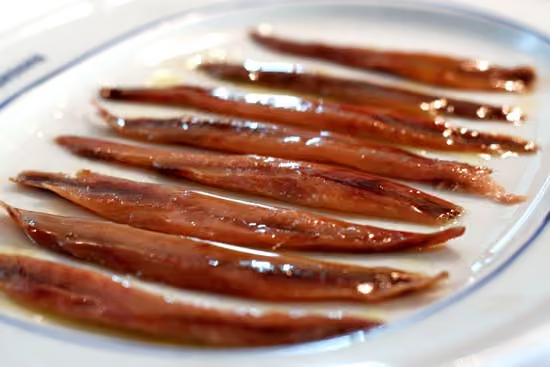
One of these entrepreneurs, Giovanni Vella Scatagliota, founded this industry in Cantabria. He established the first permanent facility and developed the anchovy fillet as we know it today, while also bringing women into the workforce as skilled cleaners. At the time, anchovies were distributed in small rectangular tins and preserved in butter to soften the fish's strong flavor and saltiness. Vella later switched to olive oil, which was plentiful in Spain.
Since then, the canning industry in Cantabria has only continued to grow and specialize.
Santander, Santoña, Laredo, Castro Urdiales, and Noja are home to the highest concentration of canneries. They primarily process anchovies, but also tuna, octopus, mussels, cockles, and other seafood delicacies.
Today, Cantabria is home to 80 salting and semi-preservation canneries that export their products to a large and growing number of countries around the world.